



▶️ Prefer to listen? Hit play. This conversation is worth your ears.
Here’s the thing about a witch hunt: the accusation is the evidence.
Substack partnered with an AI detection tool called Pangram. You can now scan posts, notes, replies, and comments over 100 words and get a percentage: human-written, AI-assisted, or AI-written.
Mine got this one…
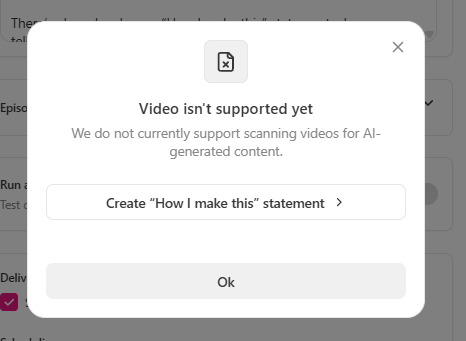
My 100% human audio isn’t supported… aha…
You can scan your own stuff. And you can scan other people’s long form ans short form posts, whether they are AI slop or not.
There’s also a lovely new “How I make this” statement where you tell readers, in your own words, how your work actually gets made.
One of those two things is beautiful. The other one hands every reader a tiny courtroom, as tiday’s podcast guest refers to.
I wrote about the new AI detecor and the AI slop radar detectors a few days back and the idea of making Substack (and LinkedIn) “slop-free.” Since today’s podcast guest and I had both shared our two cents and these perspectives were complementary, I though I needed to bring this expert and fellow Club member on the show.
Michael Hyatt, yes, that Michael Hyatt, even picked it up
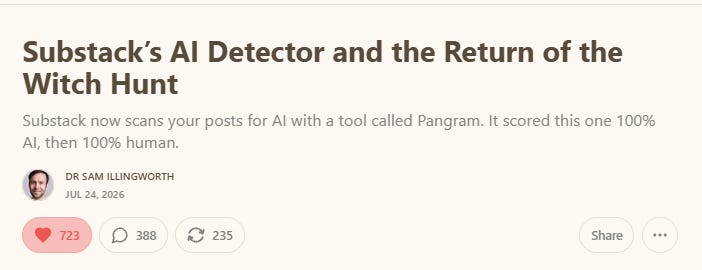
and posted about it to his audience on X.
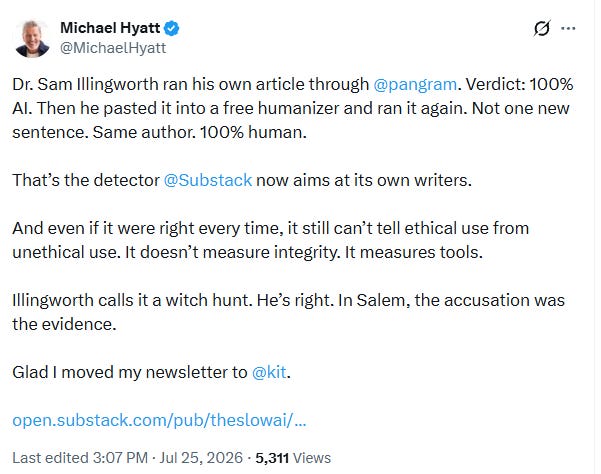
Michael walked through the 100%-AI-then-100%-human test, made the point that even a perfect detector still couldn’t tell ethical use from unethical use, and landed on this:
“It doesn’t measure integrity. It measures tools.”
So the NYT bestselling author who wrote the book on platform building (!) read one Substack post about Salem and publicly agreed. That’s how much this framing landed.
Which brings me to the person who wrote it… drum roll please… Dr Sam Illingworth.
We’d been circling the exact same topic from opposite sides of the same room and had been trying to talk for ages.
I’m so grateful for this conversation. Because I want this newsletter to be a forum for talking about writing with AI. Out loud. Without whispering. We are in a trust recession, and the only currency that still works in a trust recession is communication.
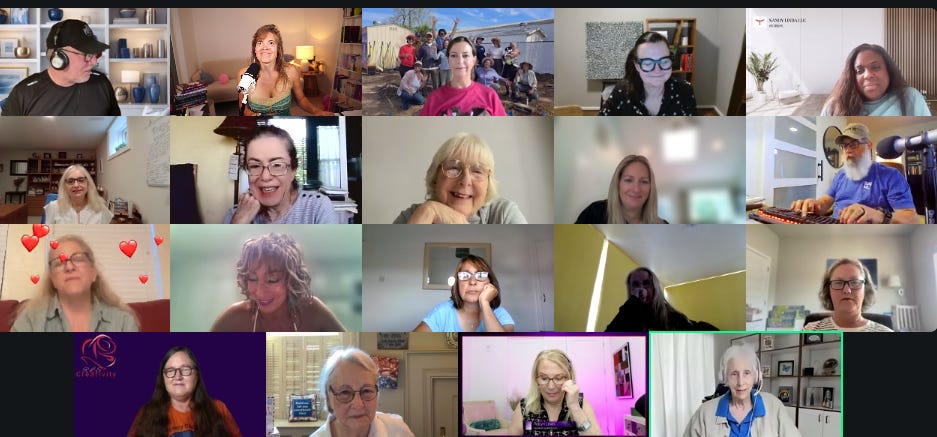
Want to talk about AI and all things Substack and publishing? Join our Club for only $9 or $90 with 40% OFF and join our weekly Friday lives. Every Friday we meet for 60 minutes and talk about what happened this week on Substack, in your life and beyond!
Join the Substack for Beginners + Club circle of like-minded people!
So: I hope you trust me a little more after this episode. Especially because I'm not giving you my opinion. I'm bringing you an actual expert.
Who is Dr. Sam Illingworth?
Why should I care?, you ask. Fine for me.
Sam is a full professor of critical AI literacy in Edinburgh. His research are, his actual, peer-reviewed, day-job area, is AI detection and why it doesn’t work. Not just technically….Ideologically.
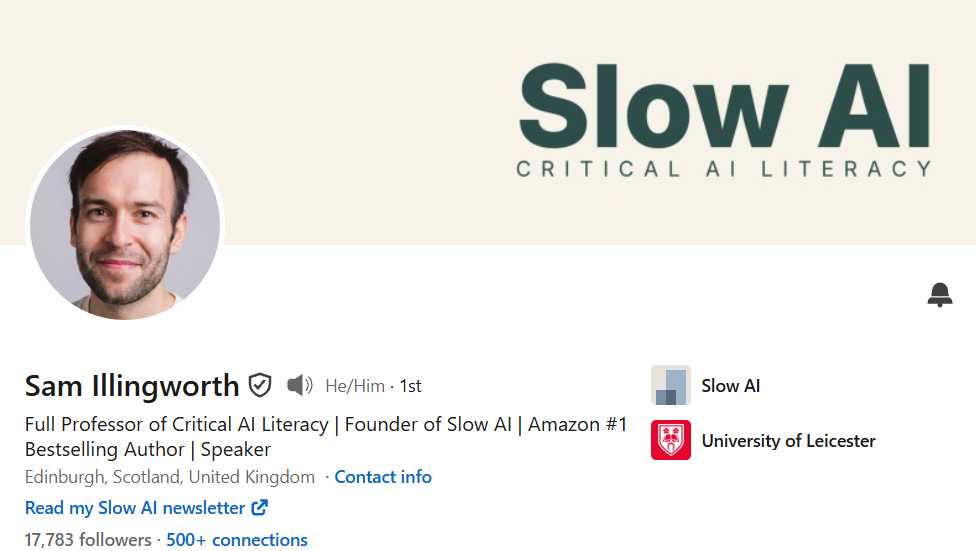
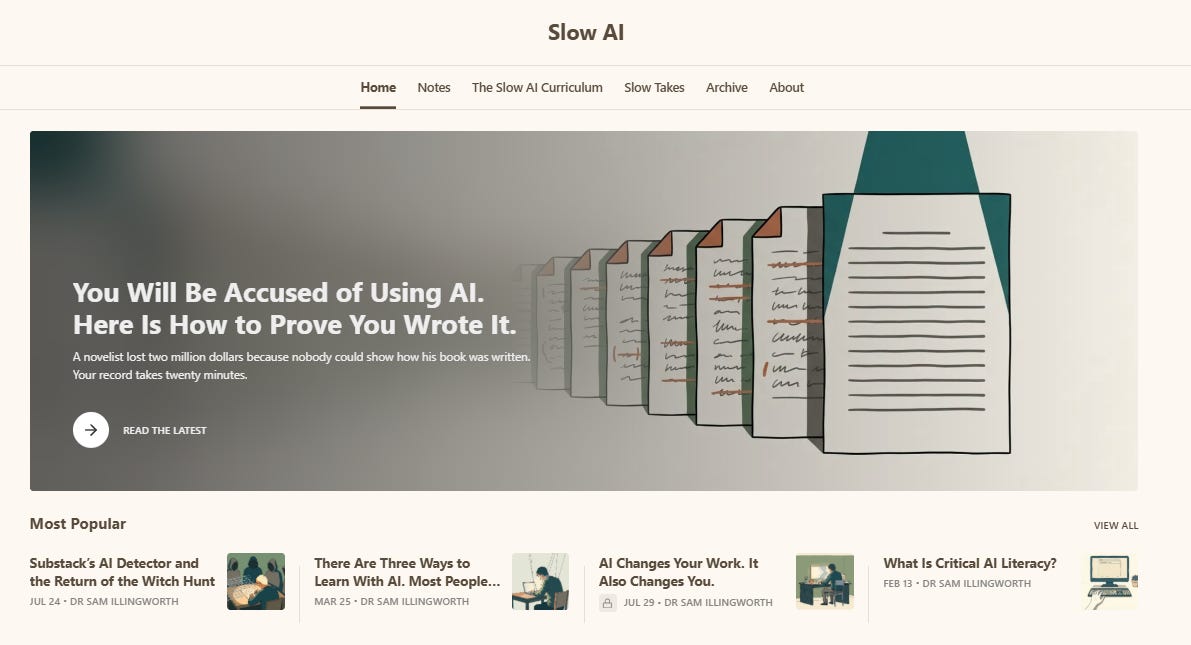
He writes Slow AI, a former #1 rising publication in Education, and he’s a Substack bestseller who…
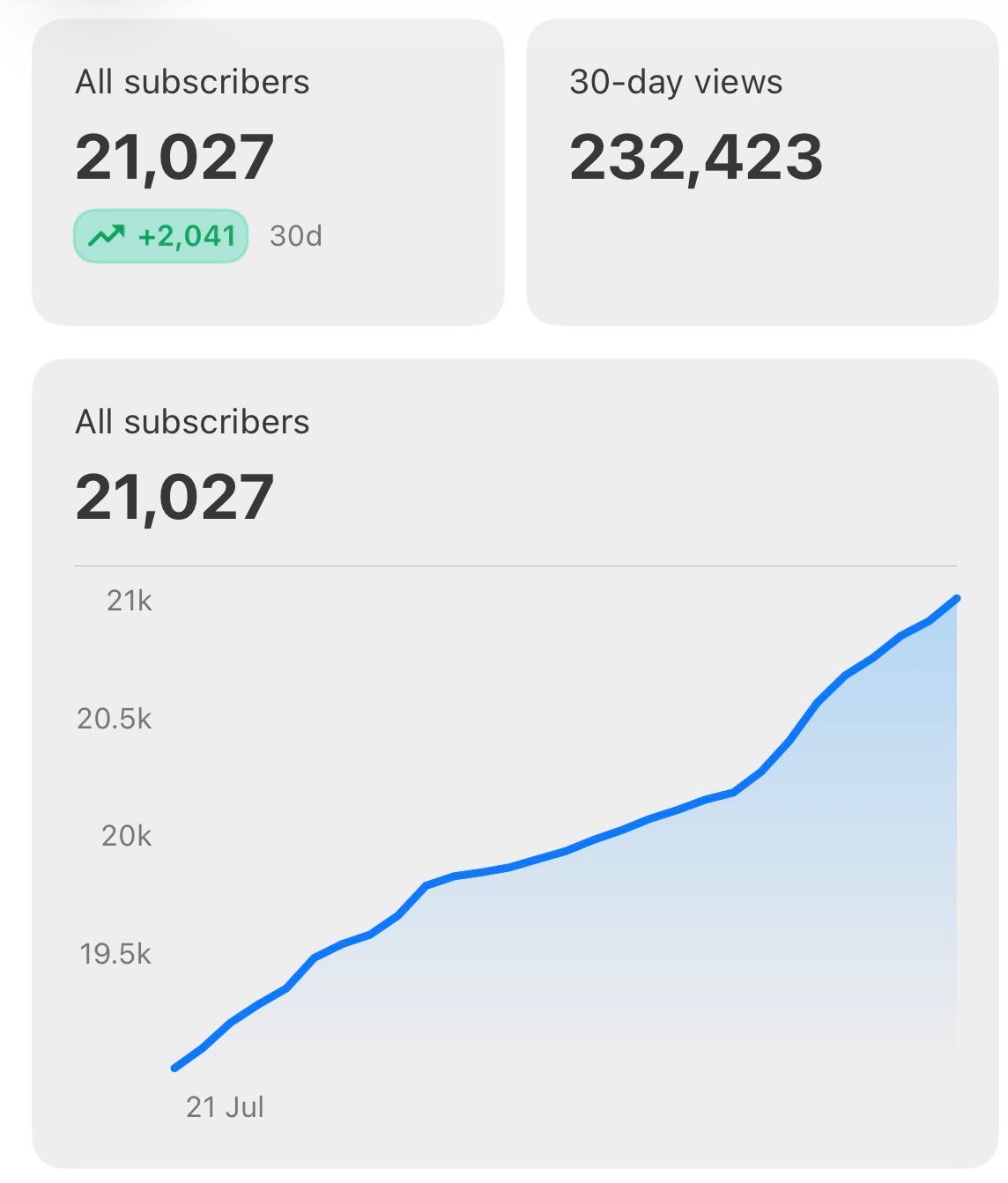
…. jut hit 232,000 views and 21,000 subscriber. 21,000 coming from 1, only one subscriber. Probably me.
He’s also the principal investigator on the UK’s largest qualitative study into how students actually use generative AI. Over 7,000 students surveyed.
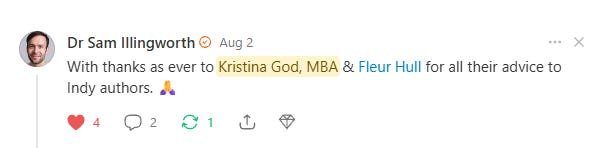
And he’s the author of Slow AI which is about knowing when to use AI and when to leave it alone, is now an Amazon #1 bestseller which my partner in crime Fleur Hull and I got to help him launch.
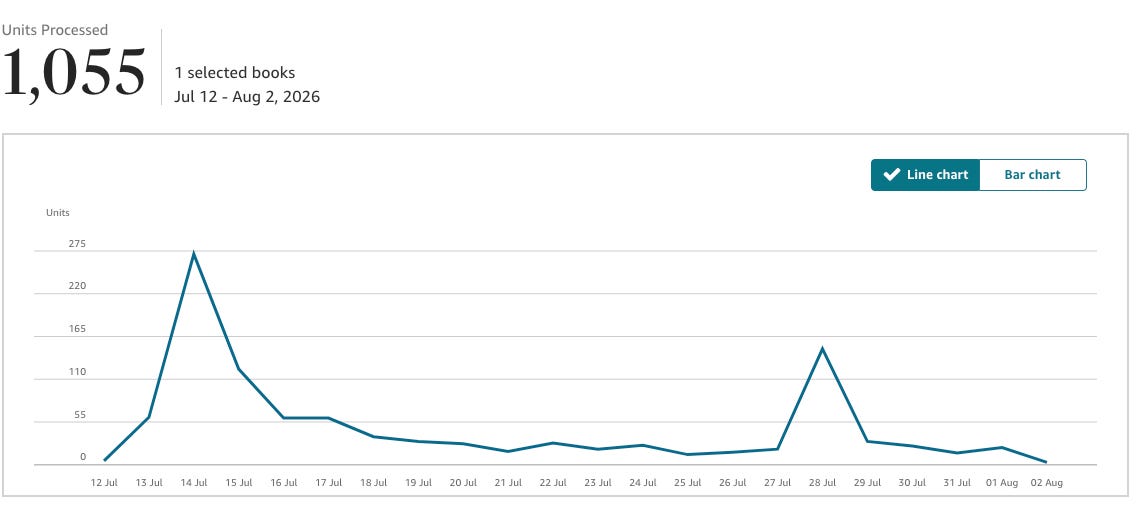
And when I tell you a book agen shared with m the average author sells less than 100 copies… this one crossed already 1,000!
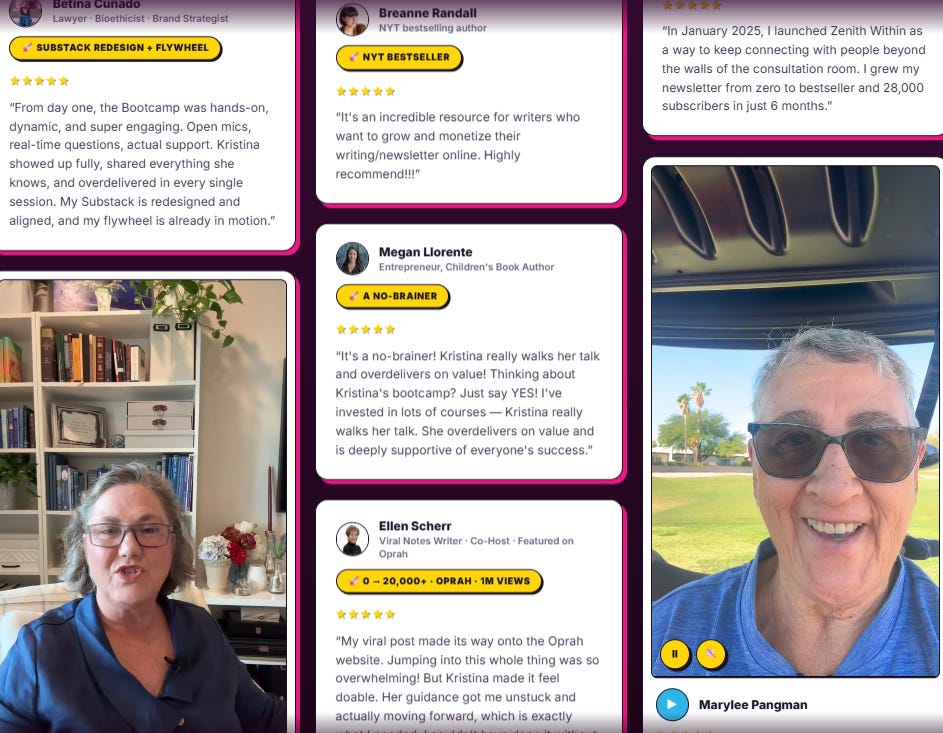
📽️You can also watch Sam’s testimonial video here.
That’s the part I’m proudest of. Because the Club x Subsatck Bookstore collab is for indie publishers.
Indies, we launch each other’s books. We show up in each other’s comments. We restack each other at 11pm. Let’s keep supporting each other!
Like the interview and love Sam? Please support him:
👉 Get Slow AI on Amazon

The smoking gun
As a subject matter expert Sam tested the new AI detector.
“I wrote a post, ran it through the AI detection on Substack, and it came out as 100% AI generated, which obviously it wasn’t. I then took the whole post, copied it word for word into the humanizer tool, took out the output, without changing a word, put it back into Substack as a test piece, ran the AI detector again, and it came back as 100% human.”
How AI detectors work
Sam shared AI detecors look for predictable sentence patterns, because that’s how generative AI builds sentences, most likely word, then most likely next word.
Now guess who else writes in predictable, formal patterns?
Neurodiverse writers (we’ve got lots inside the Club!)
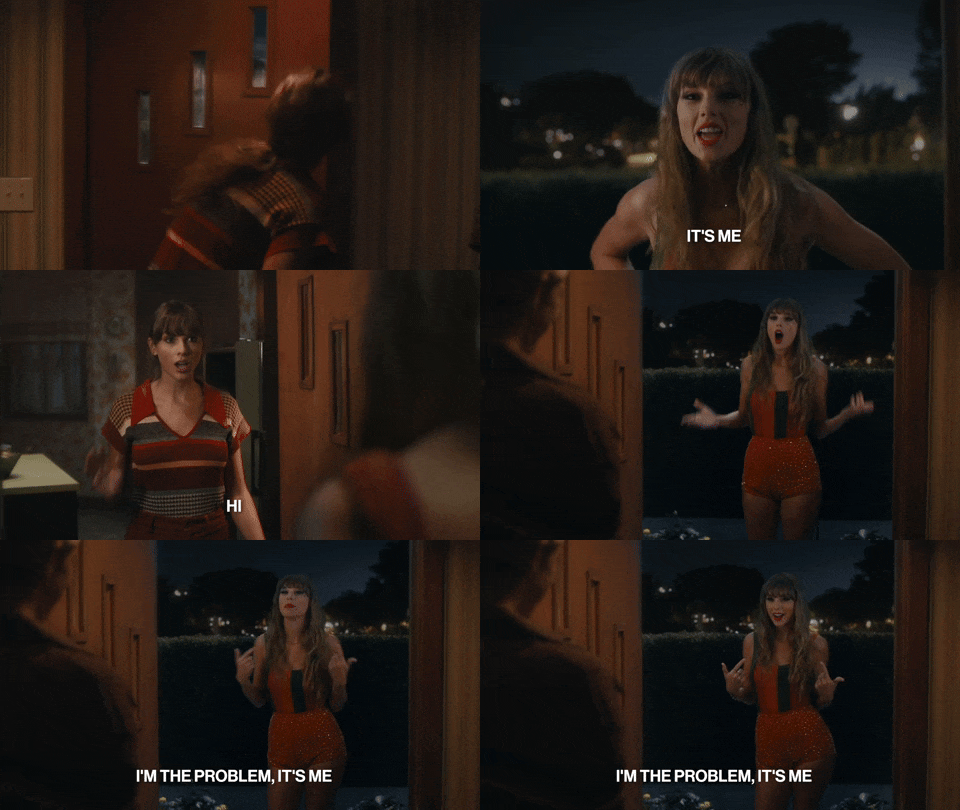
People writing in their second, third, or fourth language (it’s me, hi, i’m the problem it’s me! (I’m a Swiftie!)
This already happened early on when I was writing on Medium and they had new rules. I was using the tool Grammarly and to check for spelling mistakes and make my writing “better”. Nope. Not a good idea for me as non-native!
That’s why I got emotional in this conversation. You can hear it in my accent. I’m a non-native speaker. I learned English in a specific format, with specific words, in a specific structure.
It’s not one bad tool, either. A 2023 Stanford study tested seven detectors on essays by real students who speak English as a second language.
💡On average, 61% of genuine human essays were flagged as AI. On one detector, 97%. Every single one of those students wrote every single word.
Sam even ran his PhD thesis , atmospheric physics, submitted in 2010, more than a decade before ChatGPT existed, through a detector in 2026. It came back around 70% AI.
REMEMBER: These scores fall hardest on people who have spent their entire lives being told they write wrong. Now there’s a number to say it for them, with the authority of a machine and the deniability of an “estimate.”
AI is also making our writing worse
Ahhhhhhh….Today I met my publisher for the first tim LIVE! During the team meeting I told the group I wouldn’t use certain words in my book and when I’m speaking on stage or so because we’re living in the “AI age” and trust recession. Unlock is BANNED. Em dashes… a no no!
Because they’re on some invisible list of Words That Sound Like A Robot.
You might have read my viral post about my idea that Substack’s algorithm is a toddler we can educate. After hitting publish, I told Club member Brian D Smith I wonder what happens if I taught my toddler all these “bad words” to verbally (!) communicate with as she can’t write yet.
Would she be AI?
Produce only AI slop?
Would she still be seen as “human”?
Also while writing this, I have a little self-talk.
Am I allowed to use this word? Will someone think a machine wrote this? Should I change this word? Is there a better one? No I can’t use this. No need to overedit…this typo is okay.. looks “human”.
That’s some kind self-censorship with extra steps. My prose gets worse, my voice gets smaller, and the only winner is a classifier that updates without telling me.
And here’s my actual question, the one I can’t shake off:
What does this do to our culture, folks?
Substack is culture. My international Online Writing Club is a corner of culture.
We’re not “content creators,” (this is also a bad word, am I right?!) we’re culture makers.
And if the culture we’re building is one where writers strip their own sentences to pass a AI detector test, we’ve traded something enormous for a percentage.
The new Let’s talk about AI culture
By reading this post, you just joined our forum.
It’s a culture of people who love to talk. Who talk about ALL things online writing and publishing and AI. As, similar to Substack years back (it’s turning 10 next year, can you believe it!), it’s buzzy!
Instead of pointing at each other, we’re curious. We see AI as an unfair advantage rather than a moral failing. And we quietly know this is a bubble and that one day the witch hunt gets forgotten… and the AI bubble is gonna burst.
Because I look at what people are actually doing out here:
Bringing their book to life
Designing their own covers
Building a website for their book without paying thousands
Illustrating ideas they could never draw before
Finally having a buddy who helps a busy person get the thought out of their head and onto the page
Sam calls it removing the technological moat. The wall that used to stand between “I have an idea” and “I made the thing” is mostly gone. He built a 1980s BBC-computer-style website for 30 of his poems from a soft play centre, in five minutes.
In the live chat of the podcast recording, one of you wrote: “AI allows me to live with my disease.” Another is returning to college in her 50s. Another has 30 summers left and would rather spend them with her kids than debugging a landing page at 2am.
💡 TIP: The question was never good tool / bad tool.
The question is: does it level you up? Like Super Mario.
Do you come out the other side taller?
My son is a huge fan so the handmade “Schultüte” was, of course, full of Super Mario power - sugar pizza included.
In defense of the em dash
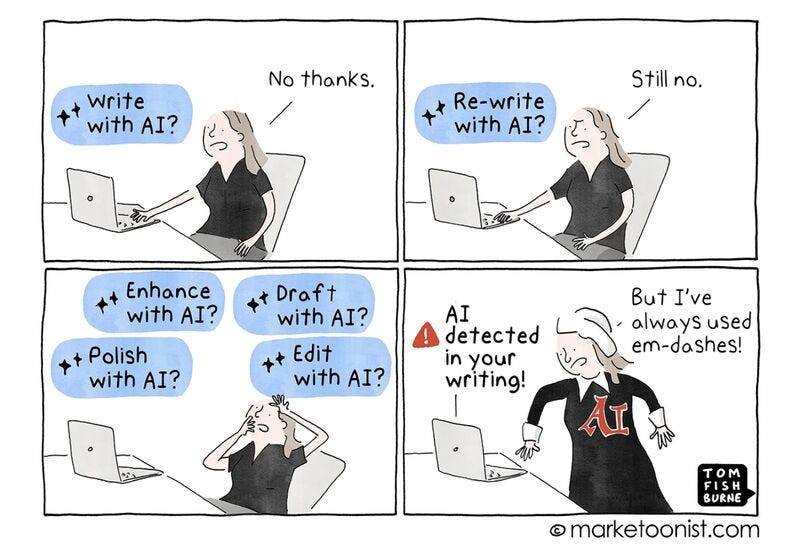
I saw a comic about em dashes this week on LinkedIn from Tom Fishburne and loved it so much I needed to share it via Notes.
No clue what to write on Notes and what to do? Gotcha!
Same artist made another point that I haven’t stopped thinking about:
What do people do with AI? They tell it to be more human. Less generic.
So where does all that great copy come from? As a solo writer, when the tool hands you a line that lands… where was that line born?
In human beings!
Brilliant copywriters. Essayists. Poets. Marketers who spent twenty years learning what makes a sentence hit. All of that human work is exactly what these models were trained on. The “AI voice” everyone claims to detect is a compressed echo of us! Of us as culture. As homo communicans.
And while we’re being honest: It hink, it’s not just AI slop out here.
There has always, always been human slop.
Ha! Nobody built a scanner for that.
Sam’s position is not“no rules”
Keep the “How I make this” statement on Substack.
Drop the score.
If you suspect something, ask the person. Don’t become a hater.
Default it to off: Let people opt in, not opt out post by post.
And one more, from me: check your Publisher Agreement. Our legal advisor Noemi from ME TIME 🎈 flagged this and she was right. There’s now a clarification on automated content analysis, and you granted a license to run your content through automated tools.
Nobody fro Substack emailed us. They have all our addresses. They could have. I reported on this in my viral post which you can read, if you’d like to binge-read what I have to offer:

Now I actually want to hear from you
No good thing, no bad thing. Everything you do and think is fine. No judgement here, which feels almost radical in a moment where a machine is judging whether you’re human enough.
You know what I also don’t like… if I need to wait when I’m online for a site to decide whether I’m human or not. Just happened today AGAIN:

Join our weekly Friday live by becoming a paid subscriber.
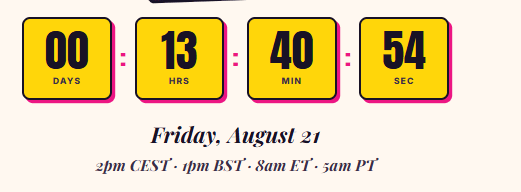
Do you say: Let me become a paid subscriber, please?
Then I’ll say: YAY!
So tell me in the comments:
What do you think about the new AI detection feature?
How do you write with AI or without it?
What have you made that you’re genuinely proud of? Share it with us!
Last words from Sam:
Go slow.


