

Is SEO Dead in 2026? The Father of SEO and Google Just Answered That For Writers
Bruce Clay died, but his legacy is still alive. Google just confirmed everything he taught

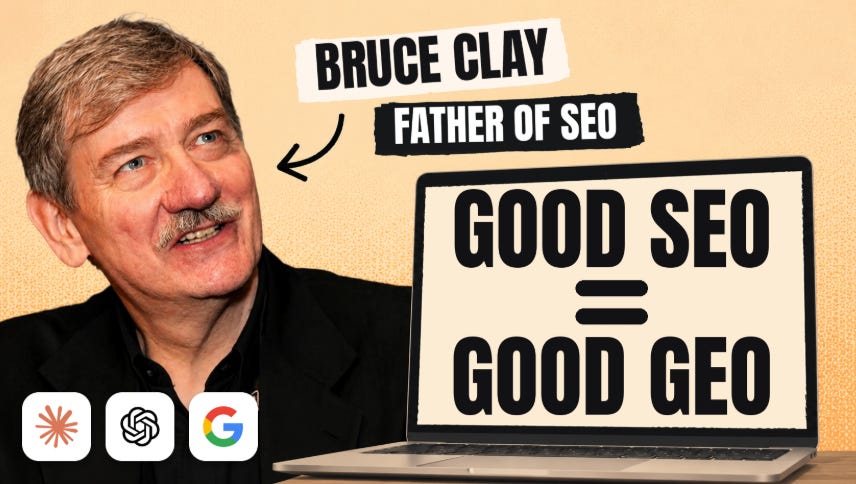
“SEO is dead. GEO is the future. AI killed search, better learn the new rules or get left behind.”
If you write anything online, a blog, a Medium post, a Substack, a LinkedIn update, a YouTube script, you’ve heard some version of that the last couple of months. Probably ten versions. And if you’re honest, it made your stomach drop a little.
So let me say the quiet part out loud: most of us just want to write. We don’t want to decode five new acronyms a quarter (SEO, GEO, AEO, LLM SEO, enough). We don’t want a brand-new “system” something changes. We want the thing we wrote to get found by a human who needs it. And lately it feels like the robots changed the locks. I feel you!
So here’s the question:
Is SEO dead? Is GEO the next big thing in 2026/2027? Do you have to throw everything out and start over?
Short answer: no, kind of, and thank goodness no. The longer answer is the most reassuring thing you’ll read all week and the best proof of it comes from a man who answered this exact question three decades before anyone thought to ask it. We lost him a few weeks ago.
Let me tell you about a man you’ve probably never heard of, who shaped almost every word you’ve ever typed into a search box.
His name was Bruce Clay, and the industry called him the Father of SEO. That’s not a cute nickname. He has even coined the term “search engine optimization (SEO),” back in 1996, before Google even existed.
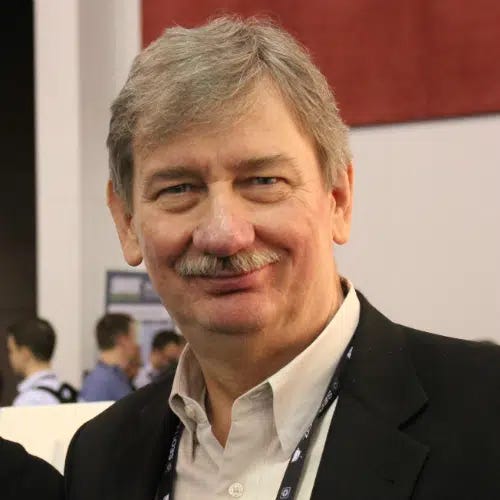
Bruce was a mainframe programmer who started his company at his dining room table, treated Google like a puzzle to solve instead of a slot machine to game, and then spent three decades teaching the rest of us how to do it honestly.
He passed away in late May 2026.1 The news rippled through the SEO world a few days ago, and I’ve been sitting with it, because Bruce is part of my story too.
I learned this craft in my early twenties, journalism degree, media and communications, then being a TalentEd at the biggest CommsMarketing agency in the world, Edelman, where I watched words move markets in real time.
Later I did my MBA in marketing and dialogue marketing. Somewhere in all of that, Bruce Clay’s checklists and guides were quietly teaching me the fundamentals nobody else bothered to explain in plain English. I owe him more than I realized until this week.
His entire philosophy fit in one line from one of his checklists:
“Your website must be technically sound and the content must be useful and trustworthy.”
So this issue is a tribute. But it’s also the most tactical SEO lesson I can hand you right now and the timing of it is almost spooky.
Table of Contents