

5 Things Attending the Tribeca Film Festival Taught Me About The Future of Storytelling
For 23 years nobody would make my film. AI finally let me tell it


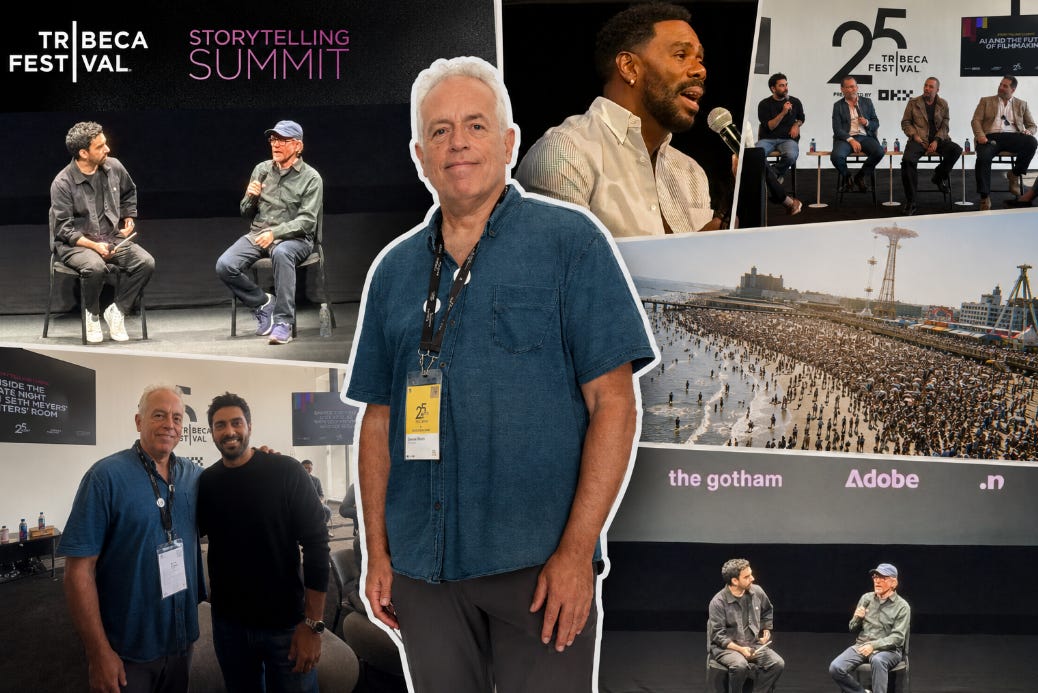
Aloha, online writer!
Welcome to edition #2 of the Substack Guest Post Spring — today’s spotlight goes to founding member Steve Stein picking up right where #1 Jeremy Ney left off.
Hot & New: As a new perk, every paid subscriber can contribute and get in front of 18,000 subscribers and 34,000 readers. If you’re a member and want your turn in the spotlight, let me know in the comments and I’ll share the direct link.

If you want to upgrade, to make the JUMP easier, get 30% off the today:
I missed the U.S. Book Show. And the Tribeca Film Festival. Germany is wonderful, but it’s a long way to New York…so I’m sitting those out. I know Steve would love a Substack event in NYC too, and I can’t make that one either. But honestly? That’s the beauty of this community: while I’m cheering from my desk across the ocean, I’ve got members as Jen Baxter ✒️ sharing live from the floor.
Now let’s hear from Steve.
I was not planning to go to Tribeca this year.
Two days before it started, I asked my digital twin if it was worth it. The answer changed my week, and maybe my career. Here is what I brought home.
1. AI did not kill storytelling at Tribeca. It saved one
Dreams of Violets is a 75-minute docudrama about Iranian civilian resistance. It was made entirely with AI, no actors, no cameras, no sets.

It became the first fully AI generated film accepted into the official lineup of a major film festival. The director, Ash Koosha, is Iranian. He could not get into Iran. He could not afford a crew. AI was not a shortcut. It was the only way the story could exist.
Jane Rosenthal, co-founder of Tribeca, said it best:
this was not just a technological achievement. It was emotional immediacy. It was urgency. The tool served the story.
The film cost two thousand dollars to make.
It is hard to wrap my head around that price tag.
2. The NonDē movement is real and you are probably already living it
Ted Hope, one of the most important independent producers of the last thirty years, launched a movement called NonDē at Tribeca this year. The idea: rebuild independent filmmaking from the ground up. Direct audience relationships. Filmmaker ownership. No gatekeepers. New financing models.
I realized halfway through his talk that I have been doing this for twenty years without knowing it had a name. Posting excerpts of my screenplay and novel in Brooklyn nostalgia Facebook groups. Building a direct audience one post at a time. Getting tens of thousands of impressions with no marketing budget and no studio.
If you are a creator building your own audience right now, you are NonDē. Ted Hope just gave it a name.
Ted Hope is prolific on Substack, check out his great work here Ted Hope
3. Period pieces are no longer cost prohibitive
For twenty three years I have been developing a limited series set in 1969 Brighton Beach Brooklyn. New Line and Showtime passed because it was a period piece. Too expensive. Too much of a gamble.
Ten days before Tribeca started I finished a sizzle reel using Runway AI. I recreated Brighton Beach 1969 from archival photographs on my laptop. The scenes that would have cost a hundred thousand dollars to build on a set, I built at home.
Cristobal Valenzuela, CEO of Runway, introduced me to a sold out Alice Tully Hall at Lincoln Center for three minutes. He talked about my story to an audience that included Ron Howard, Lionsgate, Nvidia, and UCLA Film School.
AI did not replace my story. It finally let me tell it.
Read my full story here

4. The gatekeepers are still there. But the doors are multiplying
I met producers, showrunners, casting directors, distribution executives, and AI filmmakers this week. HBO drama programming. Open Cities, Jason Kliot’s new AI accelerator for independent filmmakers. Christie Marchese, founder of Kinema, who has built a global screening tour infrastructure that any independent filmmaker can now access.
The old system is not dead. But there are more ways around it than ever before. The creators who are going to win are the ones who show up prepared, tell their story clearly, and are not waiting for permission.
5. AI is the new laptop. And nobody knows what comes next
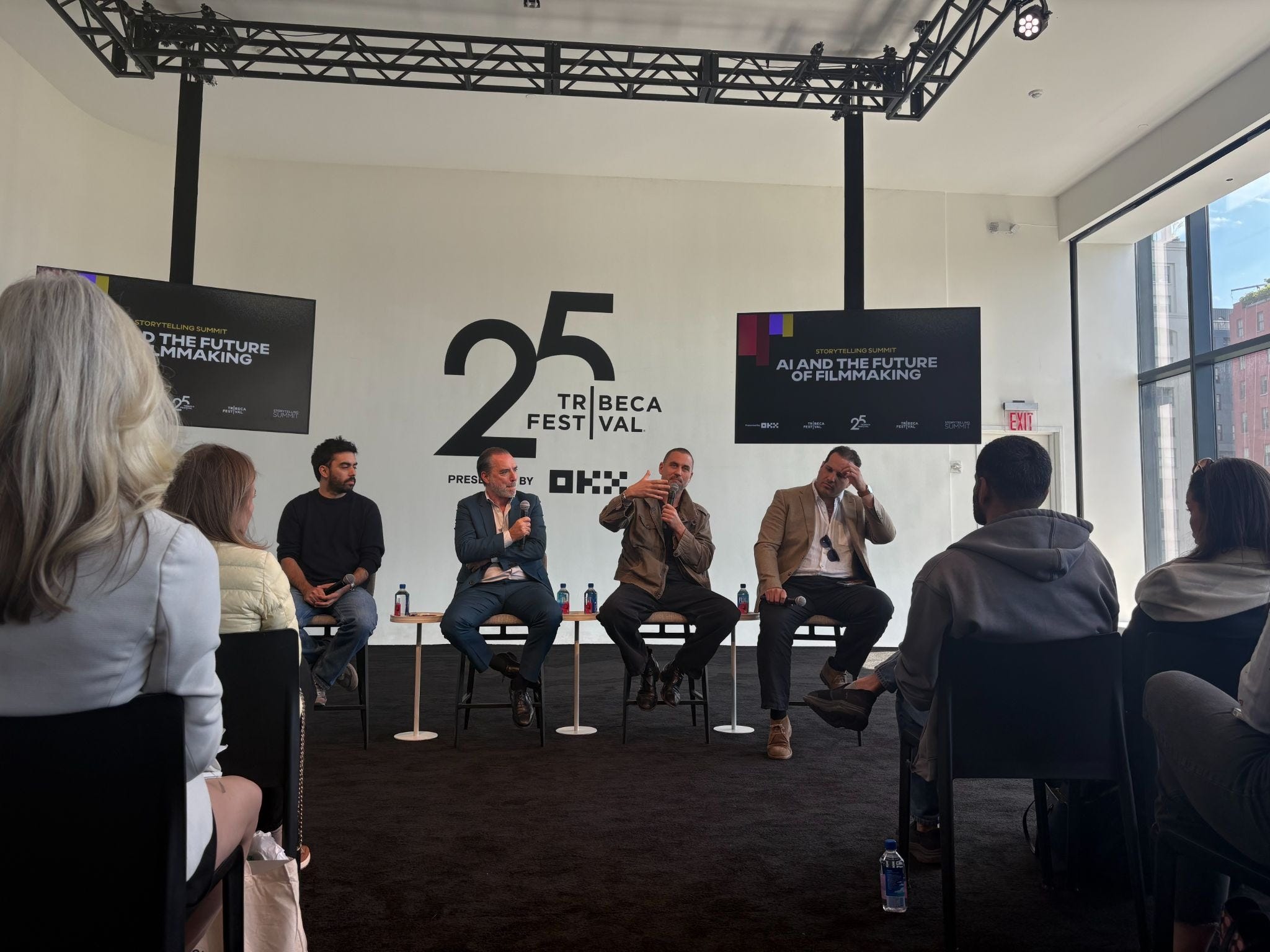
The honest truth from every panel at Tribeca this year was this: nobody has the answers. The uncertainty in those rooms was real. There was a tinge of fear alongside the excitement. AI is disrupting every corner of storytelling, from how films get made to who gets to make them.
But here is what I kept hearing underneath all of it:
Learning how to use AI as a creative tool right now is as important as learning to use a laptop was for writers twenty five years ago. The ones who figure it out are not replacing their voice. They are amplifying it.
The first fully AI generated film ever accepted into a major festival screened at Tribeca this year. It cost two thousand dollars to make. It was about Iranian civilians resisting tyranny. The director could not get into Iran. Could not afford a crew. AI was not a shortcut. It was the only way the story could exist.
For me, Runway helped me put scenes on a sizzle reel that have been taking up space in my brain for 24 years. So cathartic to share them visually and not just text on a page.
👉🏻Watch the reel at flipsidenyc.substack.com
Want to meet the incredible Steve?

Sure thing. He’s part of this year’ Substack for Beginners Class 2026 (on-demand course + LIVE sessions). Our LIVE session is happening this Friday. You can bring ALL your questions!
NEW: Monthly subscribers can attend the LIVE events, too, and can ask for a ticket!

👋🏻👋🏻Hey you! Would you mind sharing Steve’s powerful guest post with your network or with someone who needs to read it today? You can also share YOUR story of finally making the thing you’ve been sitting on!👋🏻👋🏻
Conversations about AI, creativity, and who gets to tell their story only matter if they reach more people. With every like and restack ♻️ you help and keep the light on in this beautiful corner of the internet called the Online Writing Club.
Thanks a million times!
 | A guest post by
|
runway.ai it is an ai video platform. you can see what i did at flipsidenyc.substack.com
The future of storytelling is here and there's no such thing as budget anymore. As Steve, we can create our film ideas or short films of our novel ideas with AI. What do you think about all this?
https://substack.com/chat/443311/post/74a47b73-1fda-4d0f-82da-aa5d07885eb4