



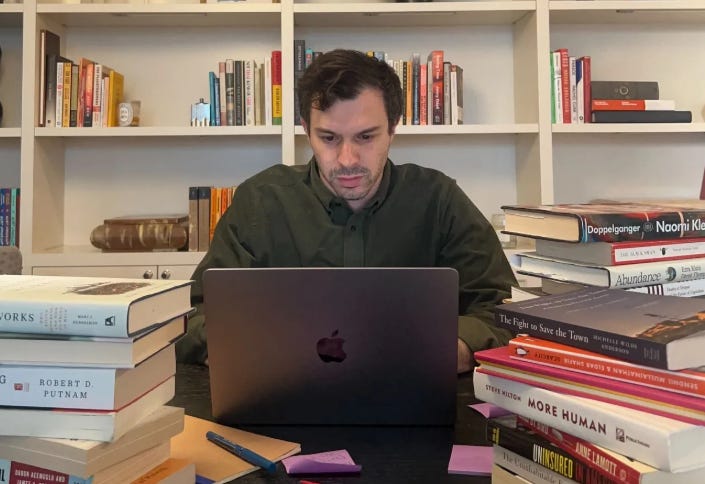
Today, I’m thrilled to share a guest post from the wonderful Online Writing Club member and professor at Columbia Business School Jeremy Ney.
Jeremy is the creator of the American Inequality , and the author of the forthcoming book The Opportunity Map, arriving in March 2027.
I’ve loved following Jeremy’s work because he has this rare ability to combine deep research, powerful storytelling, and genuine hope. His writing explores inequality, opportunity, and the hidden stories shaping America, but always through a deeply human lens.
In today’s guest post, Jeremy shares how writing on Substack helped lead to his book deal with publishing house Hachette (one of the Big Five!) and why “increasing your surface of luck” might be one of the most important things a writer can do.
So now take it away, Jeremy…
And speaking of luck...
Substack Superstar Spring Guest Post Season
You can also put yourself in a position of luck by sharing your own guest post during the Substack Superstar Spring Guest Post Season, which Jeremy is officially kicking off today.
This opportunity is open to all paid members of the Club.
Your writing can be seen by more than 18,000 subscribers and 34,000+ readers across the Club Community.

I directly attribute my Substack to helping me landing a book deal.
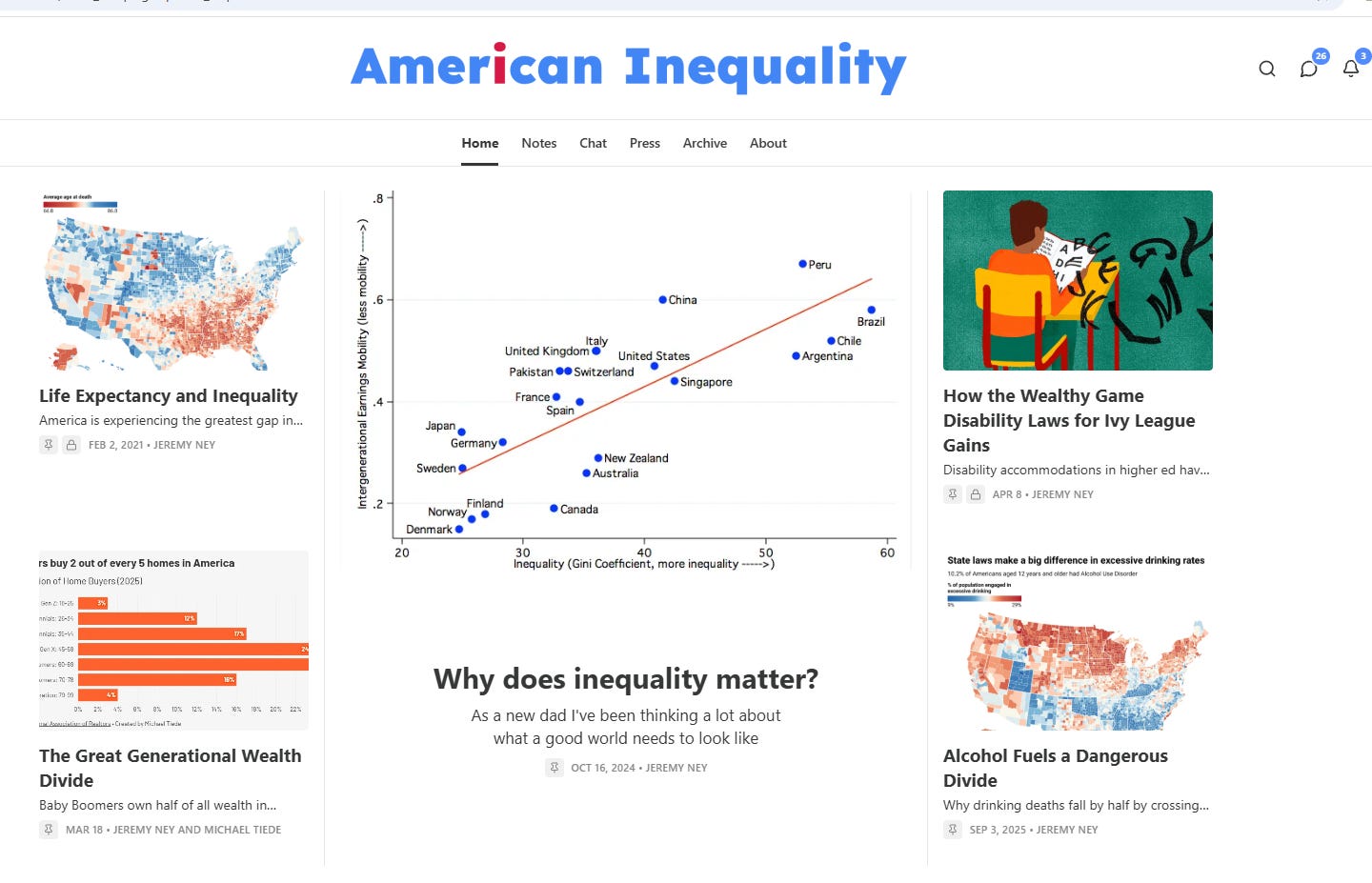
When I signed with Hachette in the summer of 2024, I had been writing on Substack for 3 years, publishing every 2 weeks without fail, and had grown my subscribers to a decent size of 13,000. I had also carved out a solid identity on the platform - covering hard-hitting issues on U.S. inequality, creating data visualization to highlight regional divides, and offering solutions that might help America forge a path forward. But it wasn’t the dogged writing or the interesting charts that led to my book deal, it was increasing my surface of luck.
Tend Your Garden
Cate Hall taught me the term about increasing my surface of luck.
She was the world’s top-ranked female poker player and then founded a biotech startup that set a global record for fastest clinical trial. In her upcoming book she wrote,
“It sounds stupidly simple, but it’s profound: the more times you interact with the outside world, the more chances you have to get lucky — to find collaborators, friends, and projects that, together, provide the right soil for you to bloom in.”
After hearing this, I realized that for the longest time I had been thinking about luck as though it were lightning - random, rare, and entirely out of my control. But Cate explains that luck is more like a garden, one that needs cultivating, where you plant lots of different flowers to see what grows, and where you create the right conditions to let your plants flourish.
I think about two quotes in particular that really stick with me about trying to increase my surface of luck:
“You can’t plan to meet the people who will change your life.” - Steve Jobs
“I find the harder I work, the luckier I am.” - Thomas Jefferson
Writing in Public Increased My Surface of Luck
I started writing because I was in grad school sitting on a bunch of interesting charts, data, and papers that I thought people would be interested to see.
But once I started writing, I started reconnecting with people from different walks of my life who were also interested in these same topics, as well as totally new people that I had tons in common with without even knowing it.
All of this came to a head in early 2022 when an old friend of mine from college who happened to be working on his own book mentioned my newsletter to his editor. She had just taken a new role in publishing where she was focused on signing authors writing about economic, policy, and social issues.
After we spoke, she introduced me to a handful of agents and within a few weeks I had signed with Dan Greenberg as my agent and 3 months later I had a book deal.
Building a Proof of Concept
In the traditional publishing world, risk is the enemy.
Acquisitions editors and literary agents are constantly looking for reasons to say “no” because every book is a massive investment of time and capital. This is where my Substack becomes my greatest negotiator. I’ve heard the analogy many times now that big-book-publishing is like venture capital - publishing houses take a lot of small bets, knowing that most won’t pay off, hoping that eventually one of those books becomes a Harry Potter or The Kite Runner.
I love data and I used numbers to my advantage when pitching my book to agents and publishers. What I realized is that Substack turned my writing into a market test. The stats from every post meant that publishers didn’t have to take as big of a leap of faith on me. If I could show an agent that 1 in 3 subscribers consistently opened my emails, that I had an active audience of now +23,000, and hundreds of those readers engage in the comments, I could help remove the guesswork.
Substack is particularly helpful here versus traditional journalism because authors have so many stats on how well their articles perform. Click-through rates, retention, sharing, audience location, overlap with other publications, and more.
Using Substack Data to Pitch
In my proposal I used a lot of this data to build my argument that people would clamor for a book.
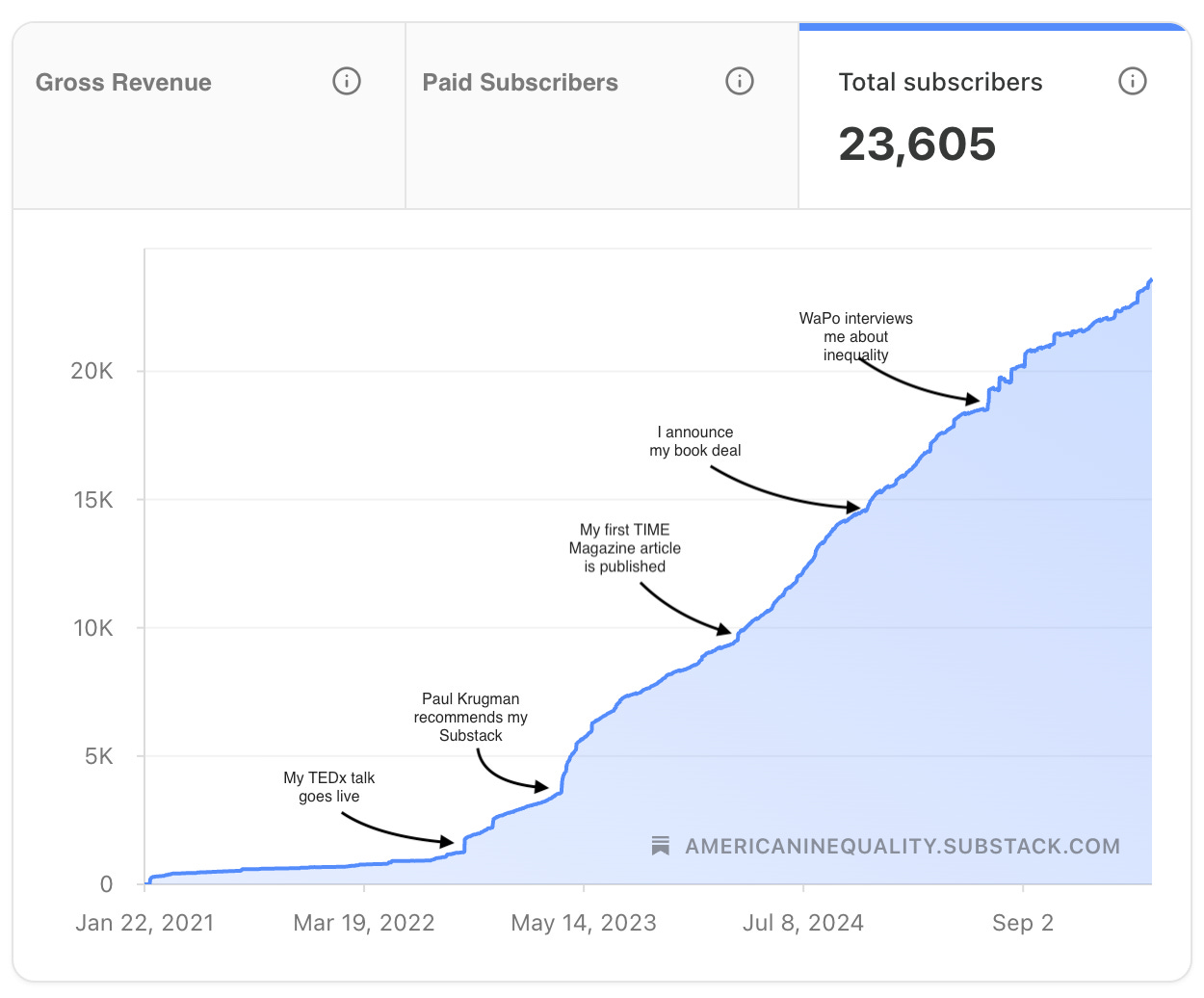
Every two weeks, I had a new opportunity to refine my big ideas. I learned that while readers appreciated the hard data of regional economic divides, they were moved by the narrative hooks that connected that data to human stories. People were also hungry for solutions. In a time of tremendous injustice and where we get so much bad news from our phones and TVs already, opportunity was just as important, if not more so, than the stories of inequality. Substack was a laboratory where I could test various theses in real-time.
My newsletter got people to pay attention, but I had to prove that my book could stand on its own.
American Inequality already existed in the world for years, I had covered a lot of topics and places, and so I had to make sure that I was presenting something novel that would make people say, I need to read this book. Even as great as I thought some article might be for my Substack, I kept the big picture in mind and held some stories back so that way when someone read it in my book, it would be the first time that insight was out in the world.
Beyond the Inbox
While the goal of a Substack is often to build an internal list, its most powerful feature might be its ability to act as a beacon for external opportunities.
I used my Substack as a portfolio to try to catch the eyes of editors at legacy media outlets. It took me a while to start calling myself a writer, because I’ll admit that the identity was foreign to me, but editors could see with a 30 second Google search that I had a real body of work and subject matter expertise to back it up.
Finally, Substack is a community of peers. By engaging with other authors on the platform—sharing their work and having them share mine—I created a cross-pollination of audiences, which turned into some of the “lucky breaks” that helped me.
I spent a lot of time supporting other authors before I asked them to support me. I linked to their work, quoted their articles, promoted their stories, sent their newsletters to friends, and recommended their Substacks in the portal. I gave generously because I thought that was the right thing to do and it felt easy to me, but it also helped increase my surface of luck.
Those authors would recommend my Substack, share my maps, invite me for a Substack Live, or link to one my works.
When Paul Krugman reshared my life expectancy article, it was because I happened to publish a piece at the right time that a lively debate was going on about inequalities in global survival rates and how the U.S. stacked up.
I will also say, the #1 thing that helped my Substack grow was recommending other authors in the dashboard portal and having them recommend my Substack too.
But not all of this passive. I sent countless cold outreach emails to people asking them to co-write articles, to recommend my Substack, to add a quote to a piece, to do a Substack Live, to link to an article, to mention my newsletter to their students.
I also paid attention to every single new Subscriber, which was a lot of work. If I noticed a .gov or .edu or email address for a large publication, I would follow-up and say hey I saw you just subscribed, let me know what you are interested in and would love to find some time co connect.
This was how I ended up getting to publish articles in TIME Magazine, Business Insider, and the Harvard Magazine.
As Luck Would Have It
Writing a newsletter and writing a book are very different beasts.
I had to get more comfortable putting myself out in the world, cold calling people, enduring rejection, getting feedback that my ideas were half baked or needed restructuring.
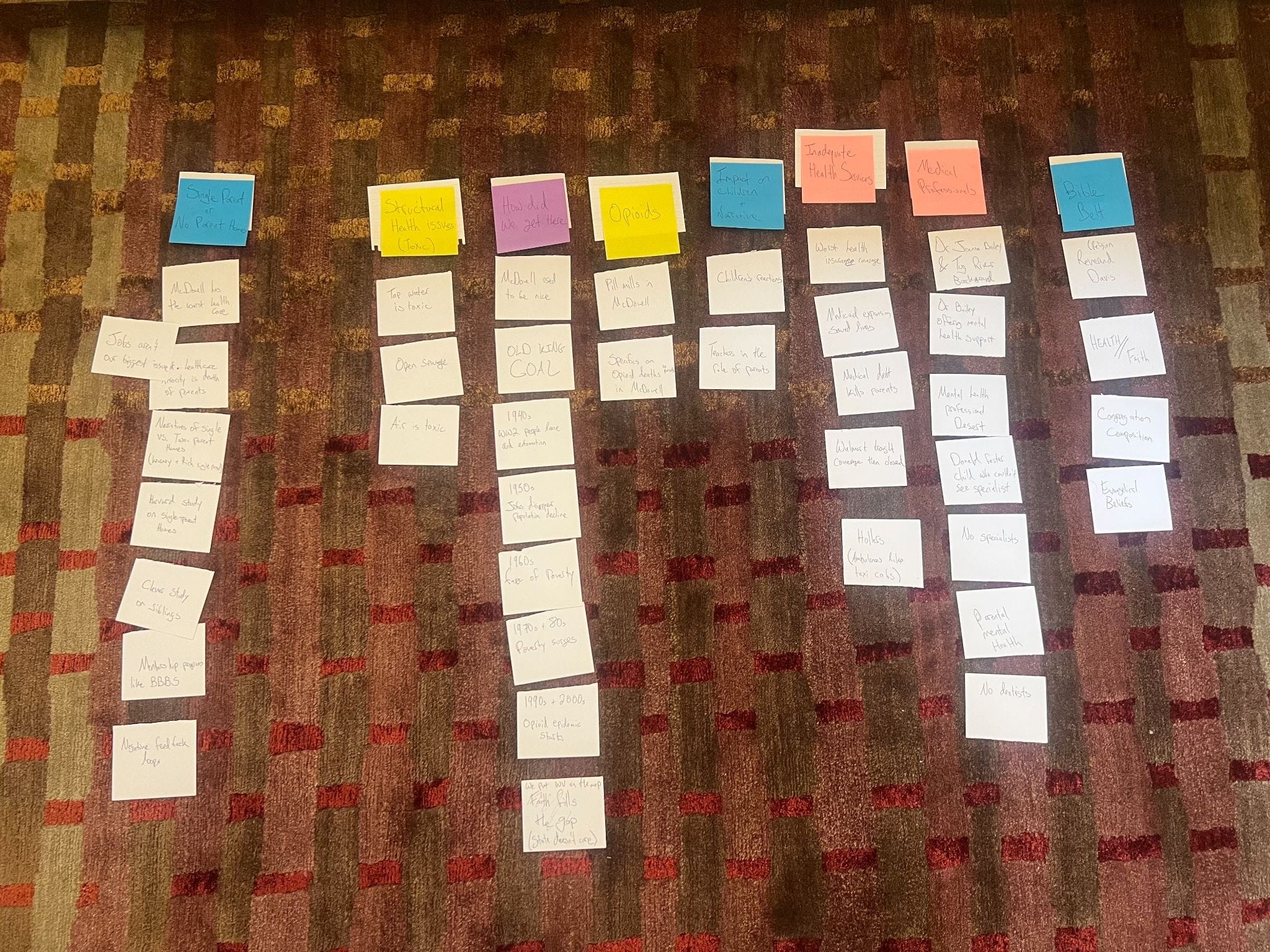
If a newsletter doesn’t land the way I want it to, I can always say to myself there will be another one. But when it came to writing a book, I had to turn the volume up to 11. I hired a small fleet of fact checkers, I had 13 different people edit my book, I wrote +1,000 notecards to organize storylines. I mailed hand-written letters to people I wanted to interview.
I believe deeply that luck plays an important part in my life, but I also deeply believe that when luck did strike, it was on me to seize that moment.
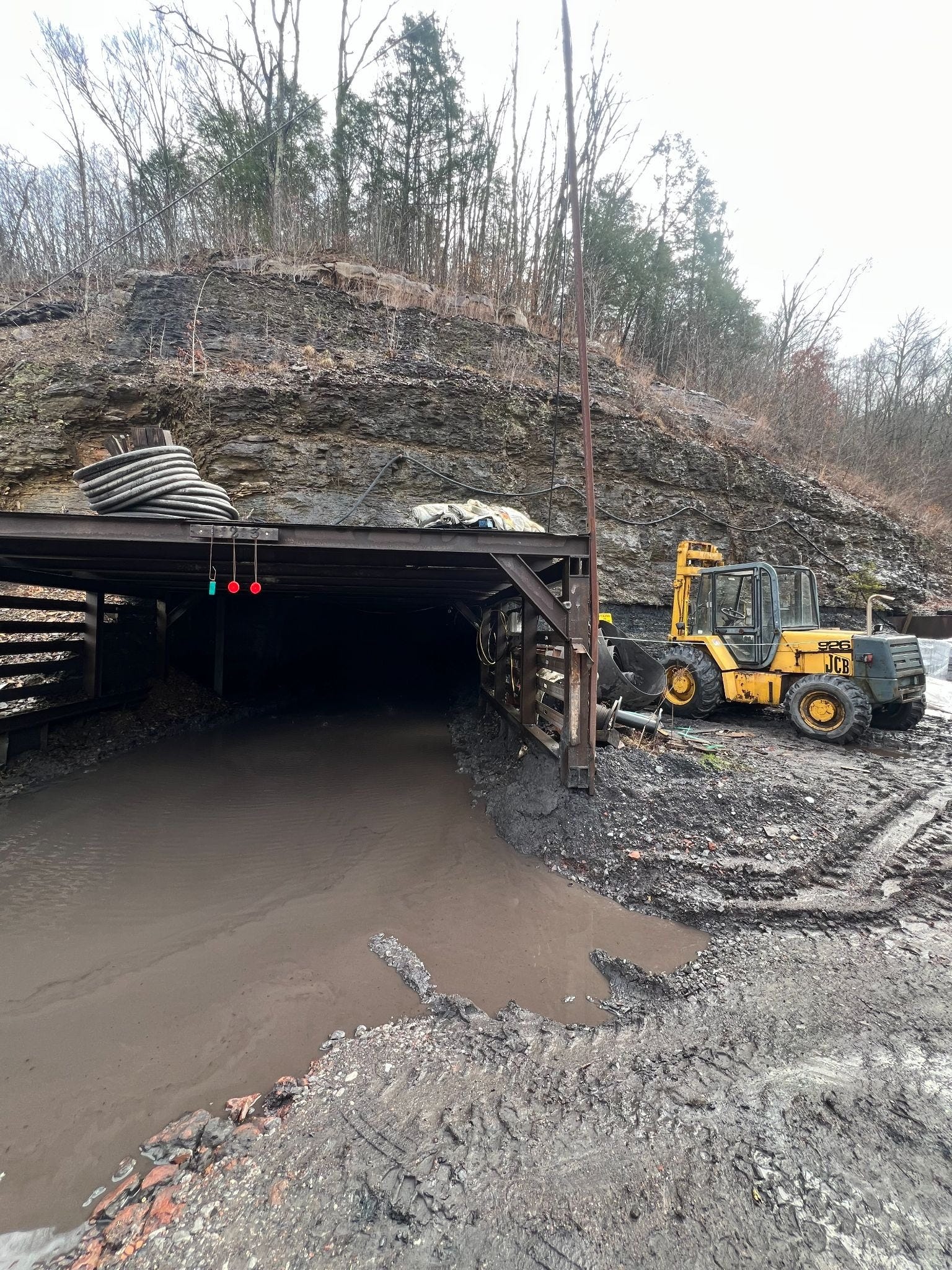
As much as writing helped me develop my big ideas, my stories, and my novel insights that could drive a book forward, it also helped me build a strong community of writers.
When the time came to work on the book, writers I had met offered me all sorts of amazing book insight — tools for coming up with titles, insights about what it would take to get on a best seller list, tricks for never losing the URL for a footnote.
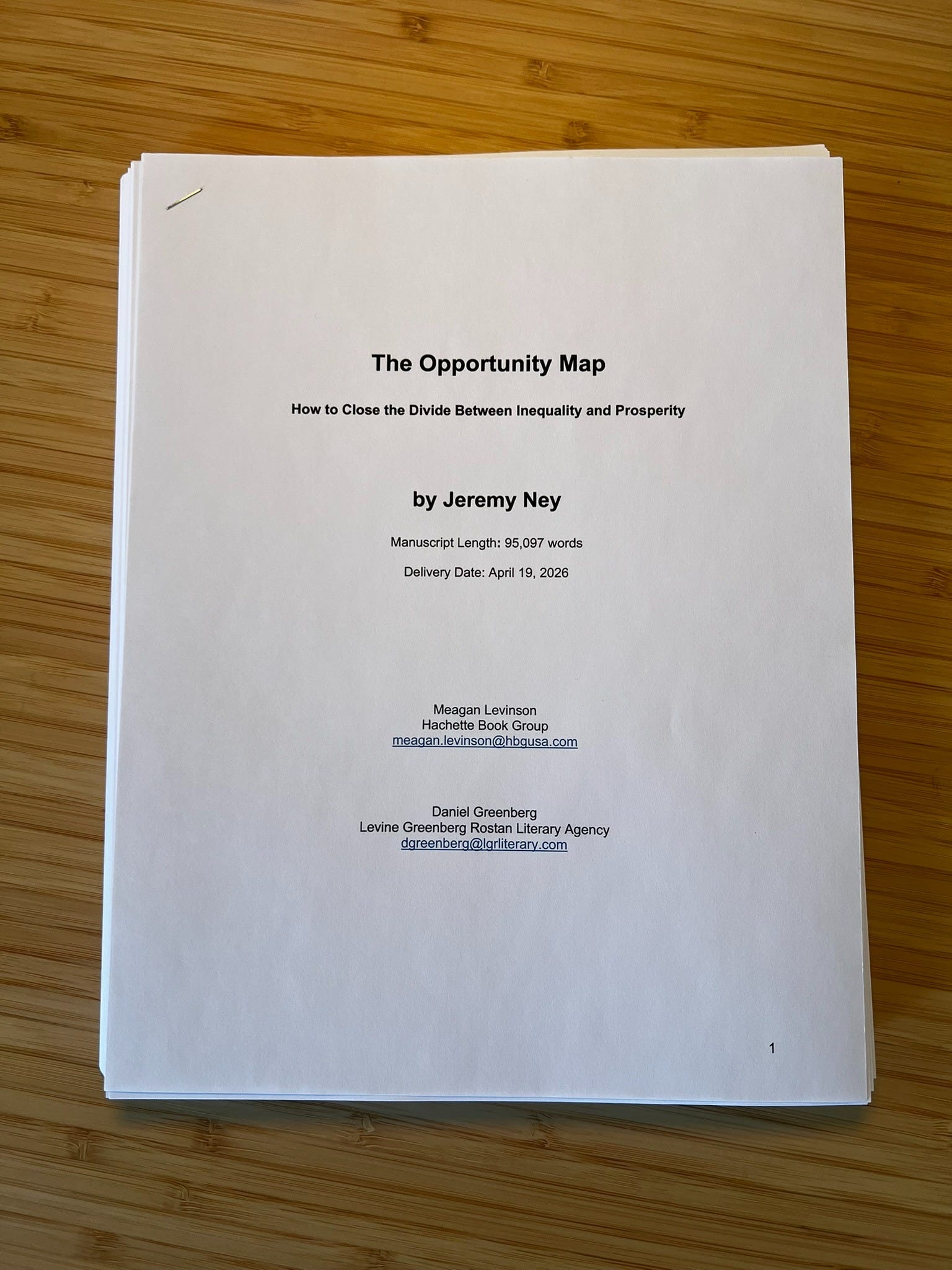
I’m incredibly grateful to that community of writers, and so my work in this post is to try to help other writers think about where those next steps can be.
The book world is a labyrinth, and now that I’ve found my way inside, I want to help pull others through. If you need a steer or a boost, reach out—I’ve seen a dozen writers turn their Substacks into book deals, and I’m ready to see you make it onto that list.
I’ve found that writing in public week after week is one of the best ways to tend to your garden.
Eventually something is bound to bloom.
Put yourself in a position of luck: THE Substack for Beginners Course 2026
Jeremy’s story is such a powerful reminder that Substack can become the place where your own stories, opportunities, collaborations, and even book deals begin.
You can put yourself in a position of luck by not only joining Substack as a reader, but by courageously sharing your own voice and stories, just like Jeremy did.
And if you want to learn Substack in a joyful, fast, and supportive way, while getting your questions answered along the way, you can join Substack for Beginners as part of the annual membership experience inside the Online Writing Club.
The course alone, taught by a real Substack Bestseller and top 15 #International author, is worth $499, but annual members get access for just $130 plus the full annual membership experience.
Alongside the on-demand lessons, you’ll also get
ongoing weekly live sessions, masterclasses, and
conversations with newsletter pros who are actively building thriving publications right now
All future updates, additions, and recorded answers, yours automatically
How do you get access?
Simply upgrade to an annual Club membership. That’s it. You’re in!
The course will start next week!
PS. You can also meet Jeremy Ney in our upcoming Substack Livestream together. We’ll meet 5/19 at 9am EST. You’ll see the calendar invite in your inbox, if you’re subscribed.

That's impressive. I was also offered a book deal based on my YouTube channel, but back then, I knew I couldn't make it writing a book with two kids in just 6 months. I'm curious about Hachette and their deadline, Jeremy. What were the deadlines? Thanks
You think the Substack was just content, but reading this it was really a portfolio that removed risk for the publisher.
Open rates, engagement, audience overlap turned your writing into something they could underwrite instead of guess at.
The piece that feels fresh is how you balanced feeding the newsletter while protecting the best material for the book itself.
When the output behind the attention is a real product (book, course, whatever), the whole thing starts returning both cash and the freedom to go deeper instead of just louder.
Solid example of playing the long game without pretending luck is passive.